
How to address your AI fears: Become a lifelong learner
Purdue Global IT faculty member shares tips on navigating new technology
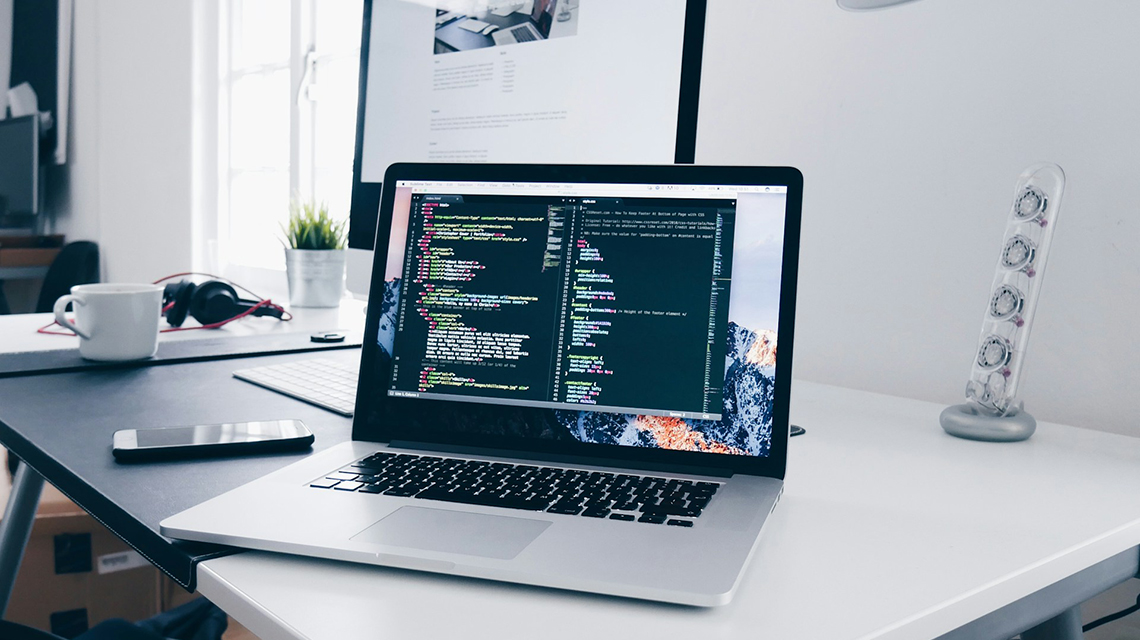
Kaan Esendemir, a faculty member in Purdue Global’s School of Business and Information Technology, encourages people to develop soft skills in addition to tech skills. (Photo by Christopher Gower/Unsplash)
WEST LAFAYETTE, Ind. — Kaan Esendemir finds himself in constant learning mode to keep up with AI and technology changes.
Esendemir is a faculty member in Purdue Global’s School of Business and Information Technology and an enterprise AI architect for a Fortune 50 company, where he works as a software engineer on customer service programs and uses AI to streamline workflows. Esendemir teaches object-oriented programming with C#, an open-source programming language, information technology and computer sciences classes at Purdue Global.
With the rapid infusion of AI in technology, Esendemir encourages people to adapt to the technology so they don’t fall behind.
“AI is here. It’s a great tool, but always go to the resources and check the product. Trust but verify,” he said.
Q: How are colleagues in your industry using AI?
A: New programs and new concepts are being introduced rapidly, and the change is constant. We’re continually testing out new software and programs, doing proof concepts on AI or legacy software to make the workflow process easier. Best practices keep changing because you find out that something else works better over time.
Q: How do you explain to your students how to navigate the tech industry?
A: I always make it a point what they need to take away from this course and how it ties into the workforce. There will be parts of AI that need a human factor and will be specific to individuals. Aside from the tech skills, I stress the need for soft skills. Soft skills are as important, if not more important, than the tech skills that you’re learning, especially communicating with co-workers, managers and supervisors.
Q: What are your students sharing with you about AI in the workplace?
A: Students have shared their anxiety about what the workforce will look like. The topic comes up in my computer science and programming classes on why we are learning coding when AI is supposed to do it. To the contrary, the foundation becomes more important. The people who are utilizing AI fully are those who have that foundational knowledge. It’s important to apply the fundamentals in any class and real-world setting and to use the AI tools in the workplace to make processes more efficient.
Q: Why is continuing one’s education important?
A: Always be in learning mode, and be a lifelong learner. Don’t assume that because you have a degree that you are done learning. Always monitor the job market while you’re in school, after you graduate and while you already have a job. It’s always good to keep your options open, and it’s always good to see what is being hired for so that you can keep your skills up to date. My students share observations on AI slop, and how a lot of work or postings look or sound the same.
Q: Why is it important to keep one’s skills updated?
A: It’s important to keep up to date with skills. The job titles and responsibilities change. We need to adapt to those. Maybe a programmer is not a programmer in the traditional sense anymore, as opposed to somebody who orchestrates and monitors the code that gets generated now with AI. It’s like how telephone operators don’t physically take the wire out and plug it in to connect calls anymore.
About Purdue Global
Purdue Global is Purdue’s online university for working adults who have life experience and often some college credits. It offers flexible paths for students to earn an associate, bachelor’s, master’s or doctoral degree, based on their work experience, military service and previous college credits, no matter where they are in their life journey. Purdue Global is a nonprofit, public university accredited by the Higher Learning Commission and backed by Purdue University. For more information, visit https://www.purdueglobal.edu.