
The Real-World Payoff of Fire Science for Firefighters
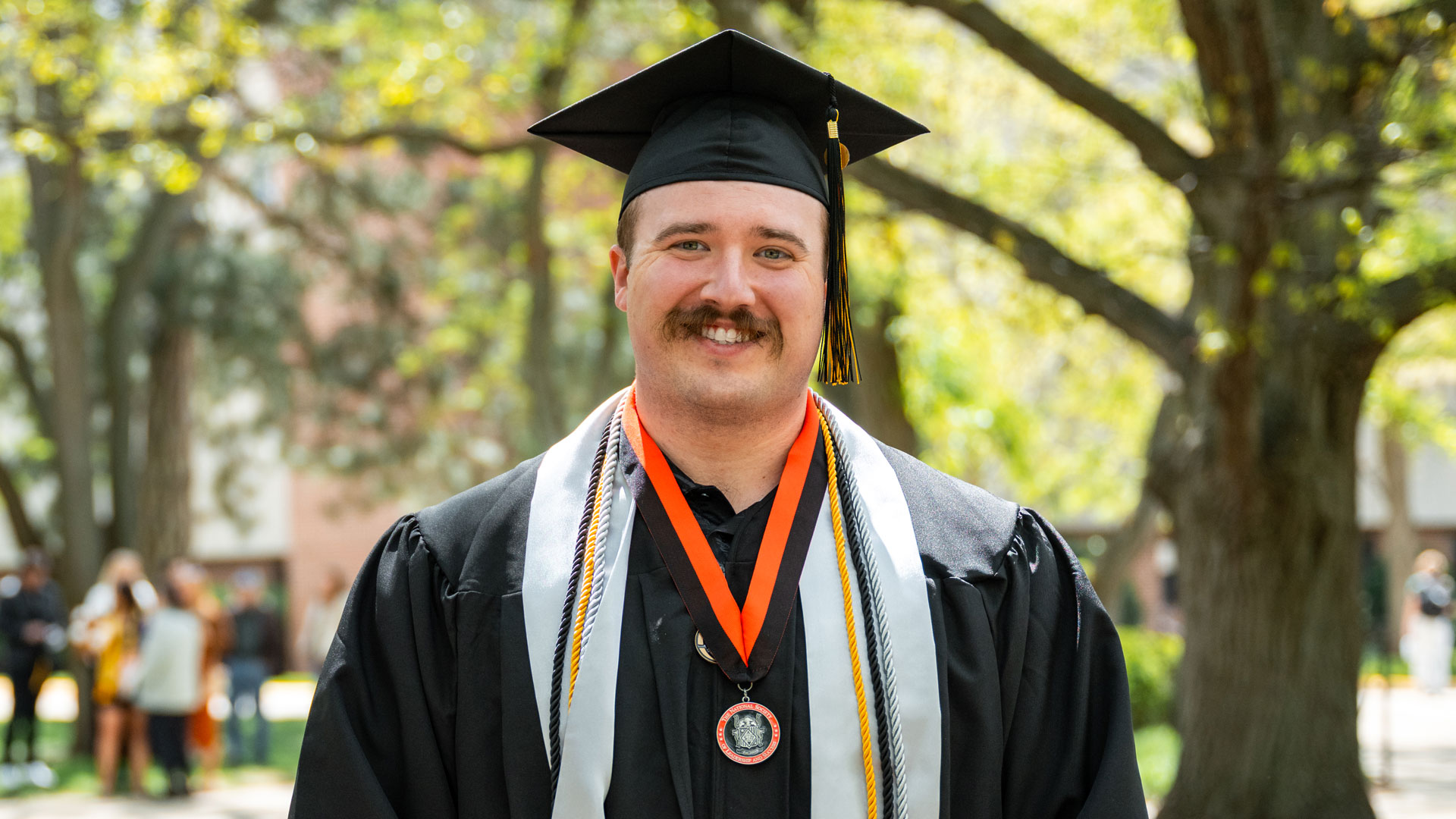
Firefighter and paramedic Dillon Dunn is ready to move forward with his bachelor’s degree in fire science. (Purdue Global photo/Kelsey Lefever)
How firefighter and paramedic Dillon Dunn benefits from his Purdue Global bachelor’s degree in fire science
Dillon Dunn has imagined himself as a firefighter since he was 3 years old. With a decade of experience in his dream job as a firefighter-paramedic, he was skeptical of going back to school. But he found that a fire science degree pulled him deeper into the job he loves. To other firefighters contemplating earning a degree, he has one thing to say: “Just do it.”
When Dillon Dunn was 3 years old, his dad was away on military service, and his mom was burning yard debris in a barrel behind their house. A two-by-four leaning against the rim caught fire and fell, turning a controlled burn into a field fire.
Dunn vividly remembers watching from the swing set as the fire department arrived to put it out. He calls it one of his earliest memories.
“I just could not have been more intrigued by that,” he says.
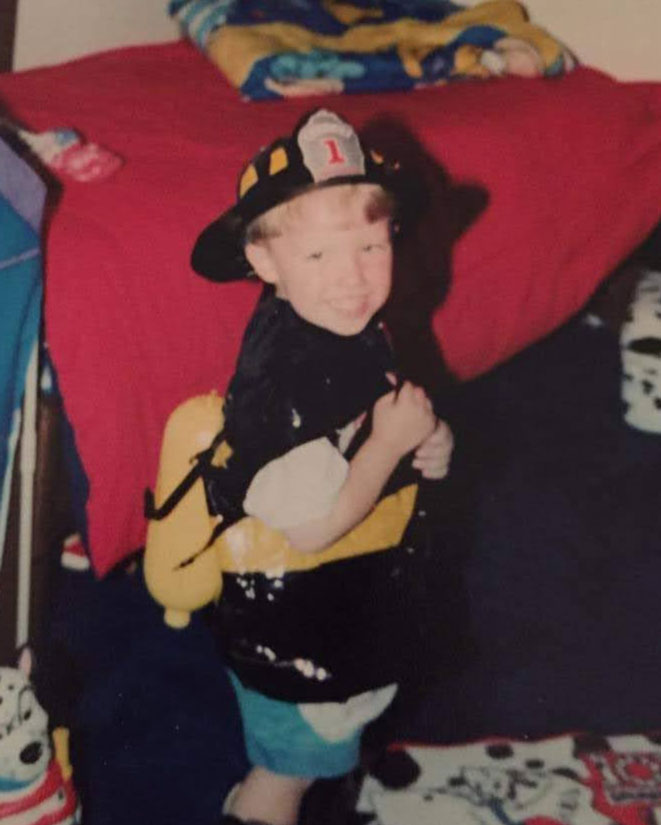
Soon after, he was at the local fire station for his 4th birthday, climbing on the trucks and taking pictures with firefighters — some of whom he’d end up working alongside decades later.
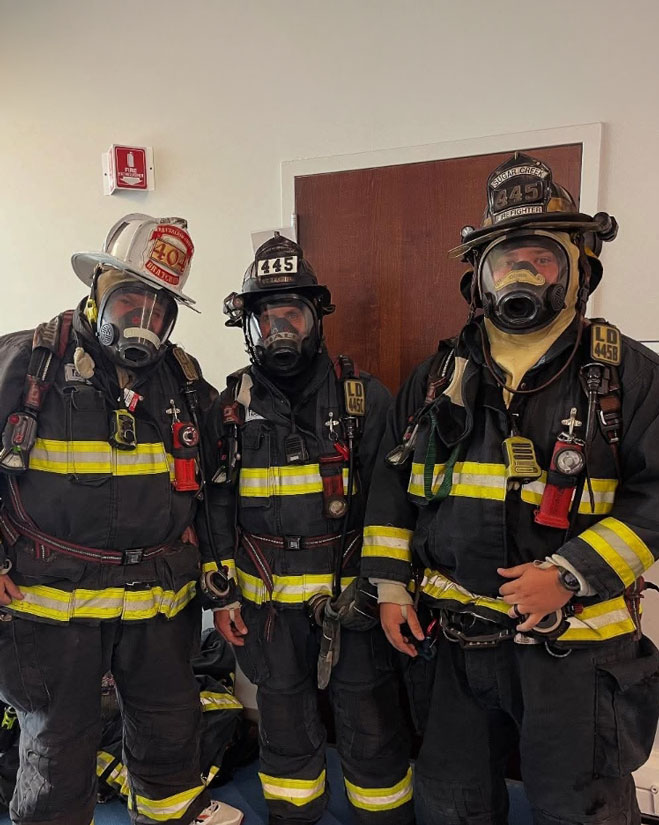
Today, Dunn is a firefighter-paramedic at the Sugar Creek Township Fire Department in New Palestine, Indiana, coming up on 12 years on the job.
“I don’t really have a desire to be a chief or go sit in a front office,” he says. “I really love what I do. I love riding a fire truck.”
Even though he was happy in his career, one goal remained unfinished: a bachelor’s degree.
Earning a degree as a full-time firefighter
When he first began pursuing his childhood dream of being in the fire service, he earned his paramedic license, completed an associate degree and built up his career. Still, the missing credential felt like unfinished work; he described it as “something that’s hanging over me.”
For him, the hardest part of earning a degree wasn’t motivation. It was logistics.
“Through all the years of being a firefighter, there was nothing that could work with my schedule,” Dunn says.
In-person classes were difficult to attend, and most of the programs he researched would put him on a track to end up in an office. Then he found Purdue Global.
Purdue Global’s fire science program had everything he wanted. It focused on what he was passionate about: investigations, building construction and fire behavior.
He also wouldn’t need to start from zero. Like many firefighters and veterans, Dunn came not only with college credit from his associate degree, but with on-the-job experience. It saved him time and allowed him to focus on new college material instead of repeating what he already knew.
“With my associate degree, national paramedic license and different fire certifications, I ended up starting my degree with around 60 credits,” Dunn says.
His search for the right program was over, and Dunn quickly adapted to the reality of working and attending school.
“Most of my coursework that I get done is during my downtime at work,” he says.
With the realities of shift work in mind when he started his degree, Dunn built a small workstation at the firehouse where he could study between calls. He knew busy days would happen. But he also knew quiet stretches would happen — when people usually scroll and watch movies to pass the time before the next call.
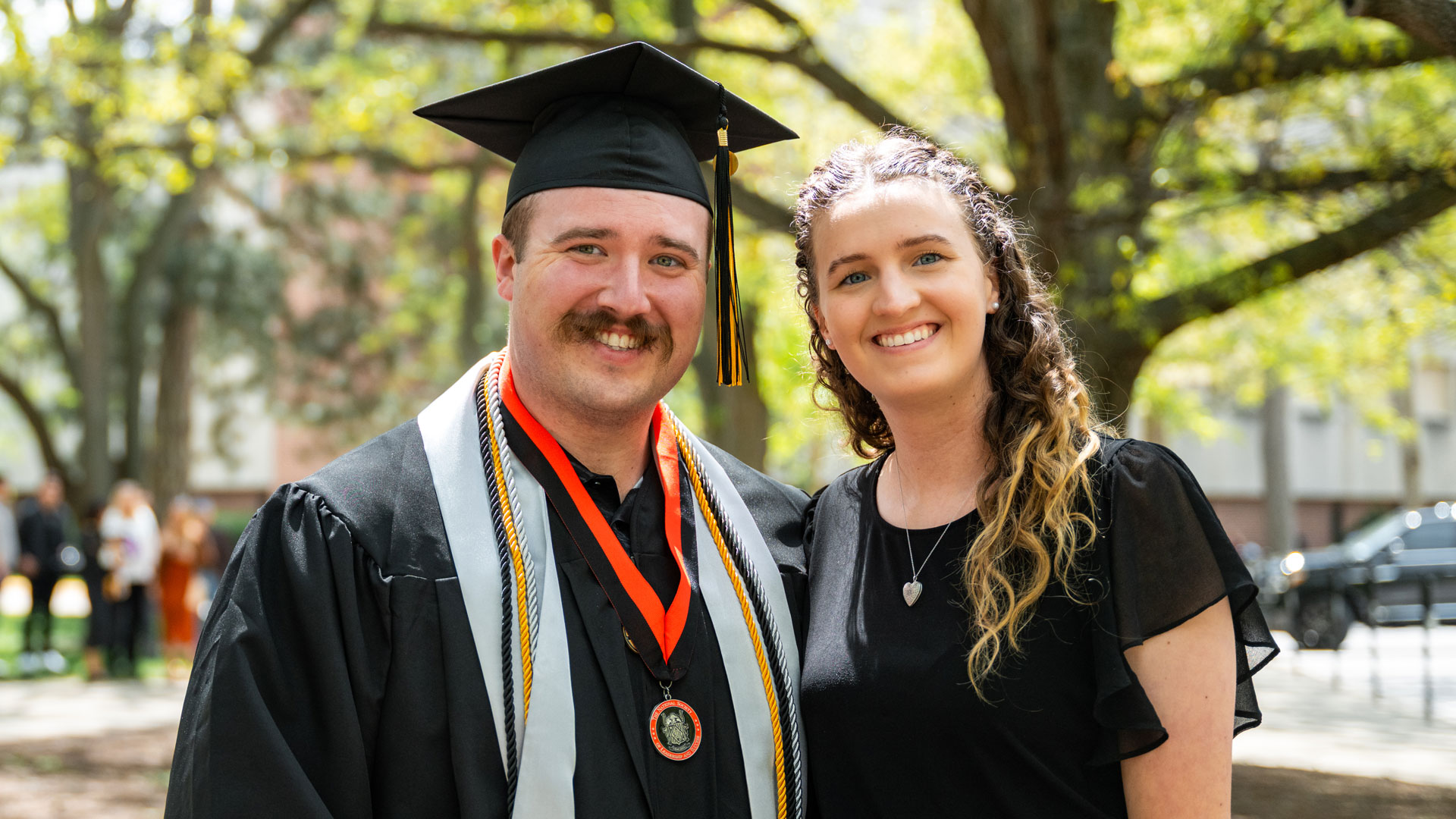
“There’s absolutely time to do it. I worked, got engaged, got married and kept a 4.0,” he says. “If I can do it, so can other firefighters.”
The benefits of a fire science degree
His hard work paid off, and his schooling showed its practical benefits.
While he was taking a Purdue Global fire investigation course, he was also working toward his state fire investigator certification. He applied the knowledge he learned to the state coursework and found himself ahead of the game, better able to recognize what was happening and why.
Another class provided insights he applied in his own jurisdiction. In a community risk-reduction course, students assess the hazards and needs around them, then build a program to reduce a specific risk. Dunn focused on a problem his department faces more often than most: falls among older adults.
Over 10 weeks, he built an elderly fall-prevention program and worked closely with his department’s life and public safety educator who already handled prevention, youth education and senior safety. When the course ended, the work continued in real life.
“Our public safety educator liked it so much that she took my programming and everything that I built in the class, and she’s working on rolling it out in our township for our elderly population,” Dunn says.
It was a reminder to Dunn that knowledge isn’t supposed to stay in the classroom. It can become real change.
One lasting benefit of the program is that it gave Dunn a clearer view of the parts of the job most firefighters don’t dive deep into: the daily behind-the-scenes problem-solving that keeps a department running smoothly.
“The biggest thing that I’ve learned is an appreciation for what goes into making everything work, for my chief officers and what they go through,” he says. “I wouldn’t have that appreciation if I hadn’t gone through this program.”
He also appreciated Purdue Global’s faculty: instructors with decades of lived fire service experience and connections with some of the industry’s top names.
“I’ve been so impressed with the quality and the caliber of the instructors and their ability to answer questions,” he says. “It has blown me away this entire time and given me people that I know in my future I can reach out to for advice and for help.”
For Dunn, walking at commencement on Purdue University’s campus is evidence of his hard work and what he values most in the job he loves.
When he talks to other firefighters who are on the fence about going back to school, he keeps it simple. “Just do it,” he says.
BS fire science ’26