
A veteran’s college playbook

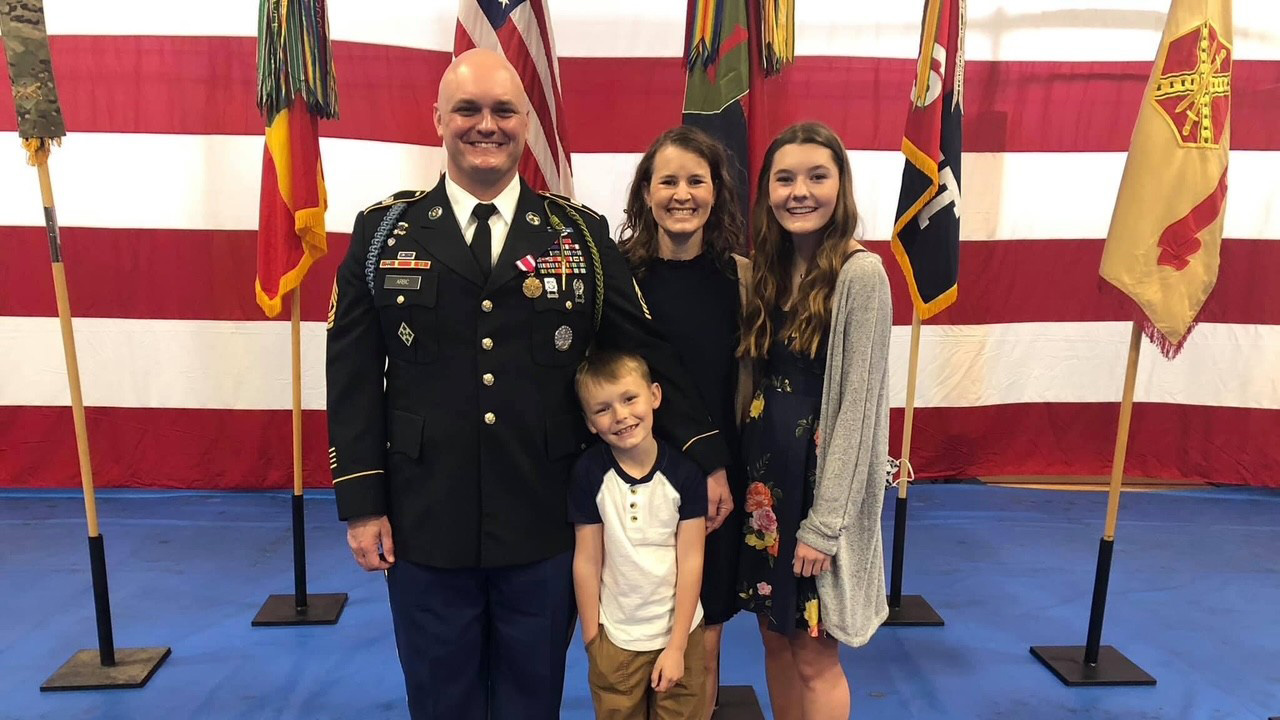
Going back to college after military service can be a unique challenge. 1st Sgt. Bryan Arbic has made it his life’s work to ensure his fellow service members have the support they need for success. (Purdue Global photo/Kelsey Lefever)
How Bryan Arbic navigated going back to school after serving in the Army — and how he helps other service members succeed
Here’s the hard truth they don’t tell you when you’re preparing to transition back to civilian life.
If attending college is your next step, you may find that, while your military experience is highly valuable, the average university system isn’t always built for how you live, work and learn. If you’re not careful, it’s easy to get bogged down in administrative red tape, burn through education benefits and end up feeling entirely on your own.
“In the military, everyone has the same mission, wears the same uniform and functions as a unit,” says U.S. Army veteran Bryan Arbic (MS higher education ’25, Purdue Global). “But in college, everyone is chasing a different degree on a different schedule. It can feel like you’re fumbling through the transition alone.”
Arbic lived that disconnect for over two decades. He began his bachelor’s degree shortly after enlisting and crossed the finish line 22 years later, just weeks before retiring from the Army.
“I was taking one class here, one class there in between deployments and field training,” he says. “When you’re a 38-year-old sergeant first class sitting in a room full of 18-year-olds, you don’t exactly fit in.”
Today, Arbic directs the Veteran and Military Success Center at a Big Ten university. When he decided to pursue a master’s degree, he refused to endure another two-decade slog. Instead, he looked at his options through a dual lens: as a veteran who had struggled through the system himself and as a professional who helps military-connected students navigate college every day.
Purdue Global hit the right balance for him.
To help other service members protect their time, money and sanity, we organized the lessons Arbic shared into a quick checklist. When you look at your favorite schools, how do they measure up?
This quick-reference playbook highlights the operational green flags of military-friendly education, from unified points of contact to flexible, sprint-style terms. Use it to spot which institutions offer the proactive support and community required for a successful transition to civilian life.
College Evaluation Checklist for Service Members
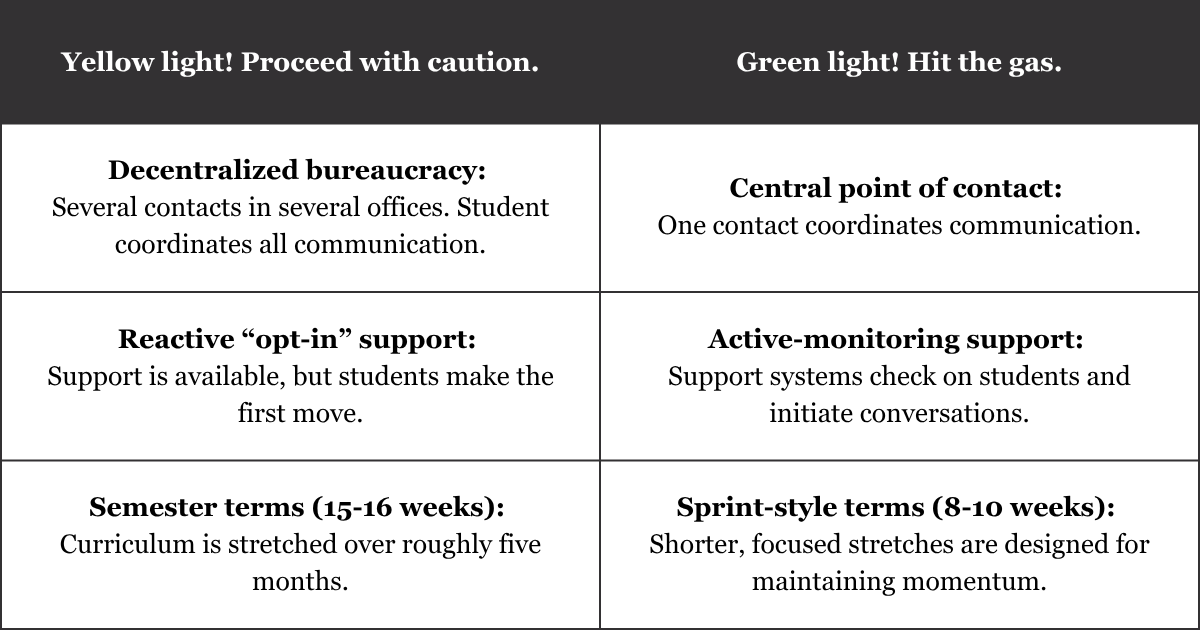
Here’s how Arbic says these three pillars help service members like himself find success.
A sponsor, but for college
When you’re in the military and arrive at a new station, you aren’t dumped at the gate and ordered to figure things out. You’re assigned a sponsor — someone who knows the area, shows you the ropes and helps you integrate into the unit.
Yet when service members enter higher education, they’re often expected to navigate admissions, financial aid and transcript evaluations across multiple, separate offices.
Even with a career in university administration, Arbic braced himself for that exact runaround when enrolling in his master’s program. Instead, his experience with Purdue Global handed him a guide — an advisor he affectionately refers to as an educational concierge.
“It made the whole process really easy,” he says. “I didn’t have to go looking for the right office or coordinator. All my questions went straight to one person — and I would get an answer within an hour, maybe two.”
Having a single point of contact was a game changer. It allowed Arbic to stay focused on his career and coursework, turning a potentially overwhelming process into a simple and supported one.
Active support for veteran success
For veterans, returning to school can bring a quiet wave of pressure. Military culture instills a deep sense of self-reliance — one that sometimes prevents service members from asking for help.
As a professional advocate, Arbic sees this silent struggle every day at work.
“As a veteran population, we don’t like to ask for help with anything,” he explains. “We’re stubborn. We think we can ruck through it ourselves.”
Because of this cultural hardwiring, Arbic knew he would never be the type of student to wave his arms and shout for a lifeline. But he found immense peace of mind knowing his advisor, professors and resource groups weren’t waiting for him to reach out. They were actively keeping watch and gently reminding him of their presence.
For Arbic, that was the security he needed.
“You can jump in a swimming pool and feel confident that you know how to swim,” he says. “You don’t necessarily need a lifeguard. But if you’ve been out there for a while and you get a cramp, it’s nice to know there’s a lifeguard who knows what to do if there’s trouble.”
Pacing for career growth
During his military career, Arbic’s run at a bachelor’s degree was a slow, grueling marathon.
He knew that to finish his master’s degree while working full time, he couldn’t afford to lose momentum by sitting out a whole 16-week term. Purdue Global’s 10-week term structure, he says, was a catalyst for building forward movement. And the rhythm felt familiar.
“Military learning systems are all about dispensing as much information as you could absorb as quickly as they could teach it. The material was condensed — get you what you need and get you out the door — without a whole lot of fluff,” he says. “Ten-week terms were similar to that for me. You see your progress faster.”
Earning a degree is a massive milestone, but for Arbic, the real victory was how it equipped him to serve his true purpose: helping other veterans navigate civilian life and flourish.
“My big thing is helping other people succeed. I get a tremendous sense of fulfillment when I can be part of someone’s journey, help enable their success and watch them thrive,” he says. “That’s what gets me up in the morning.”
Did you know your military training could earn you college credit with Purdue Global? Enter your branch, skill level and occupational code into our calculator to estimate how close you could already be to a degree.